


Archmage Idle
4.7125.00 Reviews
App Specs
- Version
- 2.0.6
- Updated On
- License
- Free
- Downloads
- 50,000+
- Developer
- TopCog
- Categories
- Simulation
- Platform
- Android
Screenshots
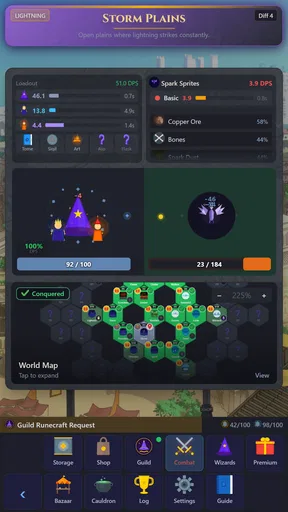


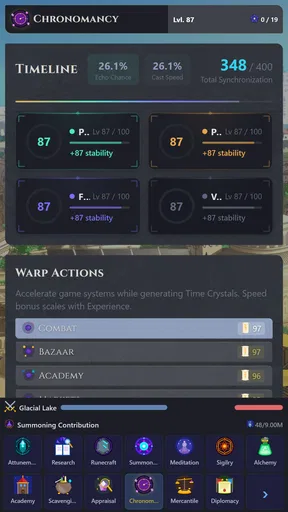
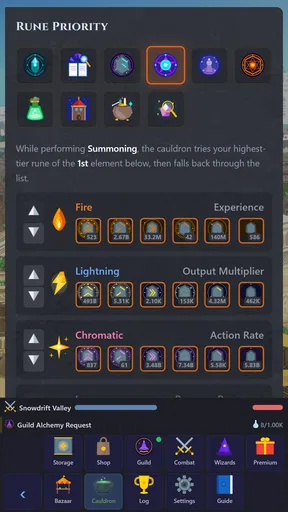

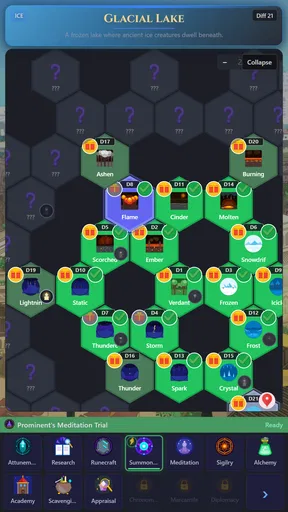
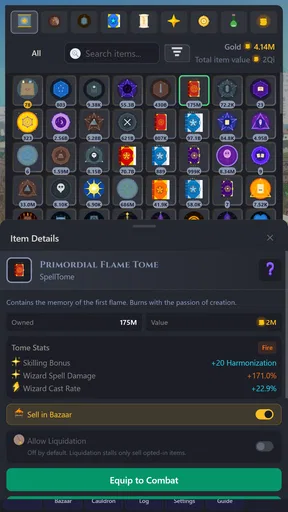
 Analysis by AppCompare
Archmage Idle is the kind of idle simulation RPG I can leave running in the background and return to without feeling that I have missed an entire evening. I play as the archmage of a wizard guild, and the central appeal is turning that position into a steady cycle of progress: check the guild, make a useful decision, collect the result, and decide what deserves attention next. It is free to play, rated for Everyone, and developed by TopCog.
What makes the game worth discussing is not simply that it uses an idle format. The more important capability is that it lets the player manage a fantasy organization without demanding constant control. That changes the rhythm completely. Instead of treating every minute as a test of reflexes, I treat short visits as planning sessions. The game works best when I want a light RPG that rewards returning regularly, rather than a demanding adventure that expects me to remain focused throughout.
The Android release has a 4.6 average from around 1.2 thousand ratings, with more than 50 thousand installs. Those figures suggest a modest but interested audience rather than a huge mainstream hit. The current version is 2.0.5, and it runs on Android 7.0 or later. I also appreciate that the basic download costs nothing, although optional purchases range from $0.99 to $19.99 per item. That combination makes it easy to try, but it also means I have to be deliberate about how I approach progression.
Running a wizard guild without constant micromanagement
The strongest idea in Archmage Idle is the fantasy of being responsible for a guild rather than merely controlling one hero in a series of battles. In a conventional RPG, I usually think about movement, equipment, attacks, and immediate survival. Here, my attention is broader. I am looking at the health of an ongoing operation and deciding how to spend my limited attention when I open the game.
That distinction matters because the idle structure turns time into part of the game loop. A session does not need to be long to feel useful. I can check what has accumulated, make a choice, and close the app with a clear sense of what the next visit will accomplish. The experience is especially comfortable for players who enjoy watching a system develop gradually. It is less suitable for anyone who needs every action to produce an immediate, visible burst of excitement.
I found the archmage role more interesting than a standard passive-income theme because it gives the waiting period a purpose. I am not only collecting currency or watching a meter rise. I am maintaining the idea of a growing magical institution. Even when the individual actions are simple, the role-playing frame gives them context. That is the game’s most effective piece of design: it makes a familiar incremental loop feel like stewardship.
What the idle capability changes
Idle games often promise convenience, but convenience can sometimes make them feel empty. In this case, the background-oriented structure works because it supports a particular kind of decision-making. I do not need to be present for every moment of production, yet I still have reasons to return. The important question becomes, “What should I do with the progress I have earned?” rather than, “Can I tap quickly enough?”
Worth Reading Before You Choose

Flipboard Shows What News Apps Must Do Beyond the Feed

Switching to Android Auto Means Rethinking Your Driving Routine

Google Calendar Makes a Crowded Week Easier to Manage

Ludo King Makes the Most of the Minutes Between Plans

Baby Panda World Brings Quick Play to Modern Phones, but Its Game Library Feels Busy

ESPN’s Live Game View Makes Following Close Games Easier
That makes Archmage Idle a good companion game. I can open it during a short break, after finishing a task, or while waiting for public transport. A quick visit is enough to reconnect with the guild and make progress. When I have more time, I can think more carefully about priorities instead of being forced into a long uninterrupted session. This flexibility is more valuable to me than flashy presentation would be.
There is also a useful psychological trade-off. Because progress continues while I am away, I do not feel punished for having a busy day. At the same time, the game does not create the same urgency as a real-time action game. If I want tension, precise timing, or a dramatic story scene, this is not where I would look. Its satisfaction comes from accumulation and planning, not from moment-to-moment performance.
How I approach a normal visit
My most effective routine is to avoid spending everything immediately. When I return, I first look at what the guild has produced and identify which improvement will make future visits more useful. That small pause prevents the common idle-game mistake of purchasing the first available upgrade simply because it is available. The best choice is often the one that improves the next cycle, not the one that gives the largest instant increase.
I also recommend treating each visit as a short review of priorities. If I am checking the game several times in one day, I can afford to make smaller decisions. If I know I will be away for longer, I prefer choices that support steady accumulation rather than a strategy that depends on frequent attention. This is not a complicated technique, but it makes the idle system feel more intentional and reduces the sense of randomly pressing buttons.
Another useful habit is to separate experimentation from routine progress. I use one visit to test whether a different investment changes the pace of the guild, then I return to the approach that feels most reliable. That way, a weak decision becomes information instead of frustration. Incremental games are easier to enjoy when I see upgrades as part of a long experiment rather than as permanent proof that I played badly.
The best everyday scenario
The game fits particularly well into a fragmented day. Imagine having ten minutes before an appointment, a few minutes during a lunch break, and another short window in the evening. Archmage Idle can occupy those gaps without requiring me to remember a complex control scheme or commit to a full mission. I check the guild, make a decision, and leave. Later, the return visit has meaning because time has advanced the operation.
This also makes it a reasonable choice for someone who likes RPG themes but has stopped playing larger role-playing games because of their time demands. I do not need to schedule a long session or remember the exact position of a quest. The archmage fantasy is available in small portions. For me, that is the clearest practical advantage over a traditional mobile RPG, where missing a long session can make the game feel disconnected.
It is not the right choice for a commute when I want a game that responds to every second of attention. If I have only a few minutes and want direct interaction, a puzzle game or action title will probably be more satisfying. Archmage Idle is better when I want to check on something I have already built and make a measured adjustment.
Where the free model affects the experience
Being free to download lowers the barrier to entry, and I think that is important for this type of game. Idle RPGs are personal in a way: some players enjoy watching numbers and systems grow, while others quickly find the repetition dull. Trying the game without paying lets me discover which group I belong to before making any commitment.
The optional purchases deserve a sensible approach. With individual items priced from $0.99 to $19.99, the temptation is obvious: an impatient player may want to speed up a slow stretch rather than wait for the guild to develop naturally. I would not buy anything during the first sessions. I would first learn whether the basic loop remains enjoyable when I let progress happen at its intended pace.
This is more than a budgeting tip. Spending too early can hide whether I actually like the game’s design. If the main pleasure comes from gradual growth, removing the waiting may also remove part of the satisfaction. On the other hand, a player who already knows they enjoy incremental games may view a purchase as a convenience. My recommendation is to treat purchases as optional comfort, not as an entry requirement.
The trade-off between simplicity and depth
Archmage Idle’s accessible structure is both its strength and its limitation. I can understand the basic purpose of a session quickly, which is ideal for casual play. But players who expect a deep tactical RPG, a large narrative campaign, or constant mechanical discovery may find the experience too restrained. The game asks me to care about long-term improvement, not to master a demanding combat system.
That difference is important when comparing it with the usual alternatives. A traditional fantasy RPG gives me more direct control and often a stronger sense of place. A competitive idle game may create more pressure through rankings or timed objectives. A management simulator may offer more detailed logistics. Archmage Idle sits between those styles: it uses RPG flavor to make incremental management appealing, but it does not replace the active play of a full adventure or the detailed planning of a dedicated business simulator.
I prefer this middle ground when I want low-pressure progression. I would choose something else when I want a story to carry me forward or when I want every decision to have an immediate tactical consequence. The game should be judged on the quality of its quiet loop, not on features it is not trying to provide.
Who will get the most from it
The best audience is someone who enjoys gradual progress and likes returning to a game in short bursts. If you enjoy optimizing a routine, comparing the value of an upgrade, and seeing a small fantasy organization become more capable over time, the archmage premise gives those actions a pleasant identity. The Everyone age rating also makes the presentation approachable for a broad audience.
It is especially suitable for players who want an RPG theme without the commitment of a conventional campaign. I can play while keeping the rest of my day moving, and the game does not require me to treat it as my main hobby. That makes it a good secondary game alongside a more active title.
I would tell highly competitive players to look elsewhere unless they already enjoy incremental systems for their own sake. I would also caution players who dislike waiting, repeated collection, or gradual upgrades. The free model makes trying it easy, but no purchase can change the fact that the core pleasure comes from patience. If the idea of checking a guild and making one careful improvement sounds boring, the game will probably feel slow rather than relaxing.
Small habits that make the loop better
My first practical tip is to resist turning every notification or available reward into an automatic action. The useful question is whether collecting now helps the next decision or merely clears the screen. A little restraint makes the guild feel like a system I am managing rather than a checklist I am emptying.
My second tip is to play in two modes. During busy periods, I use short maintenance visits and accept steady progress. During a quieter session, I review what has changed and consider whether my recent choices still fit my schedule. This prevents the game from becoming a chore and lets the idle design adapt to real life.
My third tip is to judge the game after several return visits, not after the first few minutes. The appeal is cumulative, so the important test is whether I enjoy the rhythm of leaving and coming back. A single opening session cannot show whether the guild-management fantasy will hold my interest over time.
There is also a useful trade-off in choosing when to engage. If I check constantly, I may gain more immediate control but lose the relaxed quality that attracted me. If I stay away too long, I may feel less connected to the decisions shaping the guild. The sweet spot is personal, but I found that a few intentional visits are more satisfying than compulsive checking.
My recommendation after spending time with it
Archmage Idle succeeds because it understands what an idle RPG should offer: a reason to return, a simple decision to make, and a sense that time away still contributes to the larger fantasy. Its most convincing feature is not speed or spectacle, but the way it turns short visits into the work of an archmage overseeing a growing guild.
TopCog has aimed at a focused experience rather than an all-purpose fantasy game. That focus means the title can feel calm and convenient, but it also means its appeal depends heavily on whether incremental progression is already your kind of entertainment. The free entry point is welcome, while the available purchases make patience the better starting strategy.
For me, this is a good recommendation for a player who wants a low-pressure simulation game with RPG flavor, especially on a phone used in small pockets of free time. I would skip it in favor of a traditional RPG for story, an action game for excitement, or a deeper management simulator for detailed control. But if you want to become a wizard guild’s long-term caretaker and enjoy watching careful choices accumulate, this is where Archmage Idle earns its place.
With its current version 2.0.5 and support for Android 7.0 and newer, it is straightforward to try on compatible devices. I would begin without spending money, establish a comfortable check-in routine, and decide based on whether the guild’s slow growth feels rewarding. If it does, the game can become a surprisingly pleasant daily companion; if it does not, the reason will be clear before the optional purchases become relevant.
Pros
- Simple idle gameplay that is easy to learn and play in short sessions.
- Progress continues while you are away from the game.
- Large selection of spells
- heroes
- and upgrades to experiment with.
- Fantasy-themed visuals and effects make battles enjoyable to watch.
- Works well for players who prefer relaxed
- low-pressure progression.
Cons
- Progress can feel slow without frequent upgrades or extended playtime.
- Repeated battles may become monotonous after the initial stages.
- Some upgrades and resources may encourage in-app purchases.
- Limited active control during fights may disappoint strategy-focused players.
- Notifications and reward prompts can become distracting over time.
FAQs for Archmage Idle
What is Archmage Idle, and how does its gameplay work?
Archmage Idle is an idle role-playing game focused on developing a powerful mage through automated battles, character upgrades, equipment, skills, and progression systems. Your hero continues earning rewards while you are away, then you return to collect resources and improve your abilities. The gameplay is designed for short sessions, although there are also battles and challenges that benefit from more active management.
Can I play Archmage Idle without spending money?
Yes, Archmage Idle can generally be played without making purchases. Free players can progress by completing stages, claiming idle rewards, participating in events, and using the available daily activities. However, optional purchases may provide extra resources, faster upgrades, premium currency, or convenience features. Progress can become slower at higher levels, so patience and careful resource management are important if you choose not to spend.
Does Archmage Idle require an internet connection?
An internet connection is usually recommended for Archmage Idle because the game may need to synchronize progress, deliver idle rewards, load events, validate accounts, and access online features. Some basic progression may appear to work temporarily offline, but availability can vary depending on the version and device. Connecting regularly also helps prevent synchronization problems and ensures that rewards and updates are properly recorded.
Is Archmage Idle suitable for beginners and casual players?
Archmage Idle is relatively approachable for beginners because its core systems are introduced gradually and many battles can be automated. Casual players can make progress by checking in periodically, collecting accumulated rewards, upgrading the mage, and completing straightforward tasks. Nevertheless, the number of currencies, equipment options, skills, and progression menus may feel overwhelming at first, so new players should focus on one upgrade path instead of spending resources everywhere.
Are there advertisements, in-app purchases, or privacy concerns to consider?
Before downloading Archmage Idle, users should review the current store listing for details about advertisements, in-app purchases, permissions, and the developer’s privacy policy, as these elements may change between updates or regions. Idle games commonly include optional purchases and may use advertising for bonus rewards. Avoid spending premium currency impulsively, and check the requested permissions to ensure they match the features you expect to use.


